
Pike County Court Records After Arrest
After a Pike County arrest, the jail record and the court record do different jobs. The jail booking record shows intake information, such as the booking date, arresting agency, booking charge, bond status, and release or transfer. The court record begins when the case is filed or when the court opens a file tied to a warrant, citation, accusation, indictment, probation violation, or other charging document.
The Pike County Clerk Criminal Division is the key local court-record channel. The Griffin Judicial Circuit District Attorney handles state criminal prosecutions for Pike County, so the prosecutor may file, amend, reduce, dismiss, or present charges to a grand jury. For custody and booking information, use Pike County jail inmate records; for booking photos, use the Pike County jail mugshots page.
Find Court Records After Arrest
The local court access path starts with the Pike Clerk site and the ICON Case Management login. The broader Georgia court-access page also lists e-access providers such as PeachCourt and re:SearchGA. Some records may require login, clerk help, or a formal request rather than a simple public name search.
- Start with the jail if the arrest is very recent and ask for booking date, booking charges, bond, and arresting agency.
- Check the Pike Clerk ICON Case Management login for a case by defendant name or case number when available.
- Use the clerk's criminal resources if the portal requires credentials or does not show the needed case.
- Identify whether the matter is felony, misdemeanor, traffic, ordinance, probation, or warrant-related.
- Confirm charge status with the clerk, court docket, or prosecutor when the record shows amendments, dismissals, or pending action.
The Georgia Courts e-access page is useful for understanding statewide provider options, but local case details still depend on Pike County records and the court that holds the file.
Pike Court Search Fields
The inspected ICON login page did not expose a full public court-result screen. It did show the fields needed to enter deeper case access. That makes it a court access channel, not a guaranteed open index for every Pike County court record after arrest.
| Field Label | Type | Required | Notes |
|---|---|---|---|
| UserID | Text | Yes | The inspected page showed VIEW prefilled. |
| UserPassword | Password | Yes | Required to enter deeper ICON records. |
| Log In | Image button | Yes | Button alt text was Log In. |
| Remember User Name | Checkbox | No | Optional setting on the login page. |
Charges After a Pike Arrest
A booking charge is not the same as a final court charge. A person may be booked on one charge, then the prosecutor may file a different charge, amend the count, reduce the charge level, dismiss a count, or present a felony to a grand jury. The court record is where the filed charge and later court actions are tracked.
| Document | Who Uses It | What It Starts |
|---|---|---|
| Complaint or citation | Law enforcement or court process | Initial charge or appearance path after arrest or citation. |
| Accusation or information | Prosecutor | Formal prosecutor-filed charge, often without grand-jury indictment. |
| Indictment | Grand jury | Formal felony charging document after grand-jury action. |
Pike County is in the Griffin Judicial Circuit. The Pike County District Attorney office is listed at 16001 Barnesville Street in Zebulon, with phone (770) 567-2020. The research identified David J. Studdard as Acting District Attorney on the DA source reviewed.
Pike County Charge Status
Charge status terms explain where a case stands. They are not just labels. They affect bond, court dates, record access, criminal-history results, and whether a person may seek record restriction later. Always read the docket date and the specific count because one case can have several charges with different outcomes.
| Status | What It Means |
|---|---|
| Pending | The charge is filed or active and has not reached final disposition. |
| Amended | The charge text, code, level, or count may have changed after filing. |
| Reduced | The charge level or count was lowered, often through prosecutor action or plea negotiation. |
| Dismissed | The court record shows the charge ended without conviction on that count. |
| Nolle prosequi | The prosecutor formally chose not to pursue that charge. |
| Convicted | The charge ended in a plea, verdict, or other conviction entry. |
Bond After Pike Arrest
Pike County official sources did not publish a local bond instruction page. The practical path is to call Pike County Jail first and ask whether bond has been set, whether a hold exists, what court set the amount, which payment types are accepted, and whether a bonding company may post. If the jail directs the caller to court, use the clerk or court that controls the warrant or case.
| Bond Type | How It Works |
|---|---|
| Cash bond | Money is paid directly under court rules to secure release. |
| Surety bond | A licensed bonding company posts bond for a fee or collateral arrangement. |
| Property bond | Real property may secure release when accepted by the court. |
| Personal recognizance | Release is based on a promise to appear and comply with conditions. |
| No-bond hold | Release is unavailable until a judge or issuing court changes the status. |
| Detainer or hold | Another agency may block release even when one Pike charge has a bond. |
Warrants and Arrest Records
The Pike County Sheriff's Office page says the sheriff serves criminal warrants, subpoenas, and civil papers. The county budget also identifies a Civil and Warrants Division. No official public active-warrant search, most-wanted database, or app-based warrant module was located. For warrant-related court records after arrest, use the sheriff, clerk, and issuing court rather than unofficial warrant aggregators.
Warrant terms can matter after booking. An arrest warrant starts a custody event. A bench warrant often comes from a missed court requirement. A probation warrant can trigger a hold. A fugitive or out-of-county hold can keep a person in Pike County Jail until another agency acts. A search warrant usually relates to evidence and may not mean the person is in custody.
Charges vs Convictions
Being arrested or charged is not the same as being convicted. Court records after a jail arrest may show accusations before any final decision. Georgia Felon Search and GCIC tools are for criminal-history and conviction-related research, not for confirming every jail booking or pending arrest.
| Charge | Conviction | |
|---|---|---|
| Stage | Allegation or filed count after arrest | Final finding by plea, verdict, or court entry |
| Where found | Jail booking records and court filings | Court disposition and state criminal-history systems |
| Can change | Yes, charges may be amended, reduced, or dismissed | May be appealed, corrected, or restricted only under legal process |
Restricted Georgia Arrest Records
Georgia commonly uses the term record restriction rather than expungement. O.C.G.A. § 35-3-37 and GBI instructions explain the process for eligible arrest records. Eligibility depends on the disposition and the facts of the case. A dismissal, nolle prosequi, or certain non-conviction result may support a request, but the court, prosecutor, and GBI process control the outcome.
| Public Access Limited | Record Still Exists | |
|---|---|---|
| Georgia record restriction | Limits public access to eligible criminal-history records | Law enforcement and authorized agencies may retain access |
| Sealed court file | Restricts access to a court record by court order or rule | The file is not treated as erased |
| Commercial copies | May require separate correction or removal steps | Third parties may lag behind official records |
GCIC and Felon Search
The Georgia Crime Information Center supports criminal-history services, record restrictions, and related state systems. The Georgia.gov Felon Search FAQ identifies a public electronic search for certain felony conviction, plea, and sentence records under O.C.G.A. § 35-3-35(c), with a $15 search fee listed by Georgia.gov. That tool is not a Pike County jail roster and is not a full arrest-history file.
Important: Jail bookings, pending charges, and statewide conviction searches answer different questions and should not be treated as the same record.
Pike Clerk Criminal Source
The official Pike Clerk Criminal Division page is the local source for criminal filing and court-record context after a Pike County arrest.
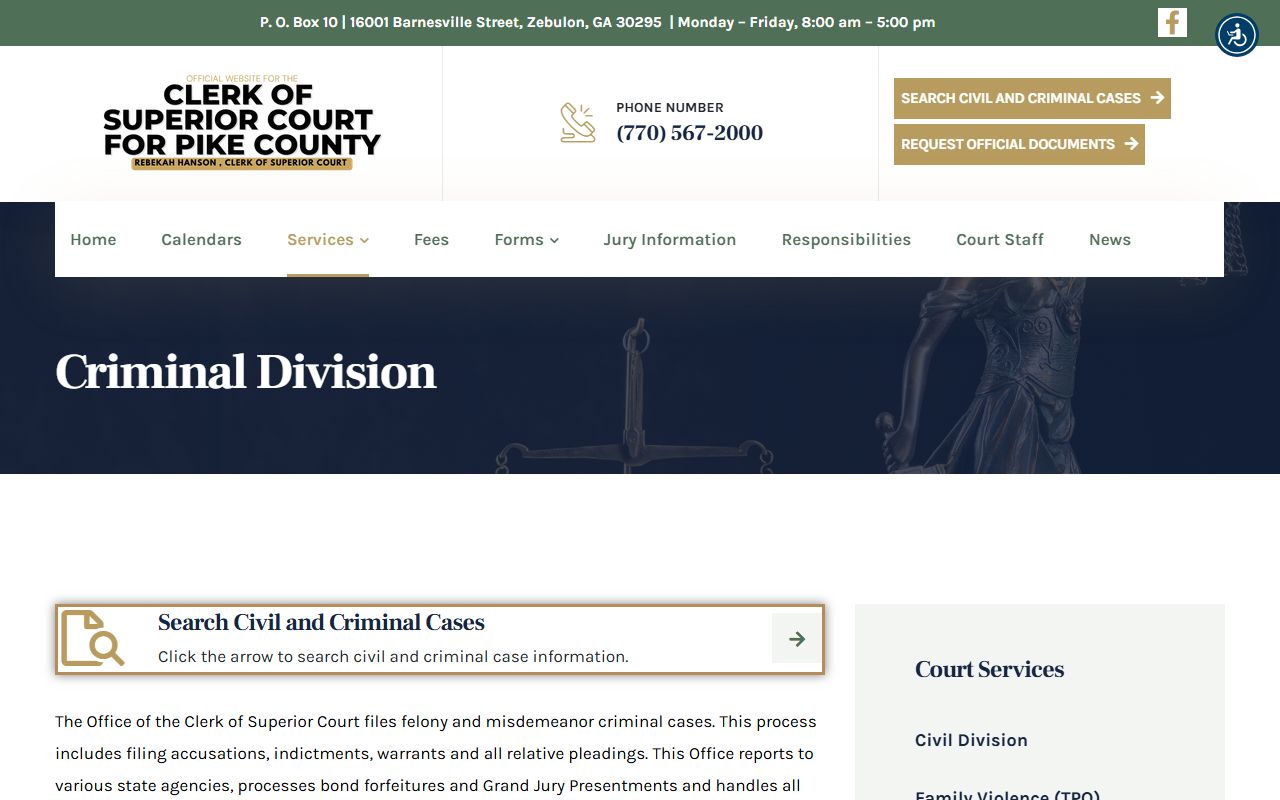
The screenshot supports the key access split: jail records confirm custody, while clerk and court systems track filed criminal charges.